
Cupping Therapy At Hackney Podiatry & Health
Cupping is a traditional complementary therapy that involves applying specially designed cups to the skin to create gentle suction. Practised for centuries in Traditional Chinese Medicine and other traditional healing systems, it is commonly used as part of a holistic approach to physical wellbeing.
At our Broadway Market clinic, cupping can be incorporated into a personalised approach to musculoskeletal care and wellbeing, depending on your individual needs and treatment goals.
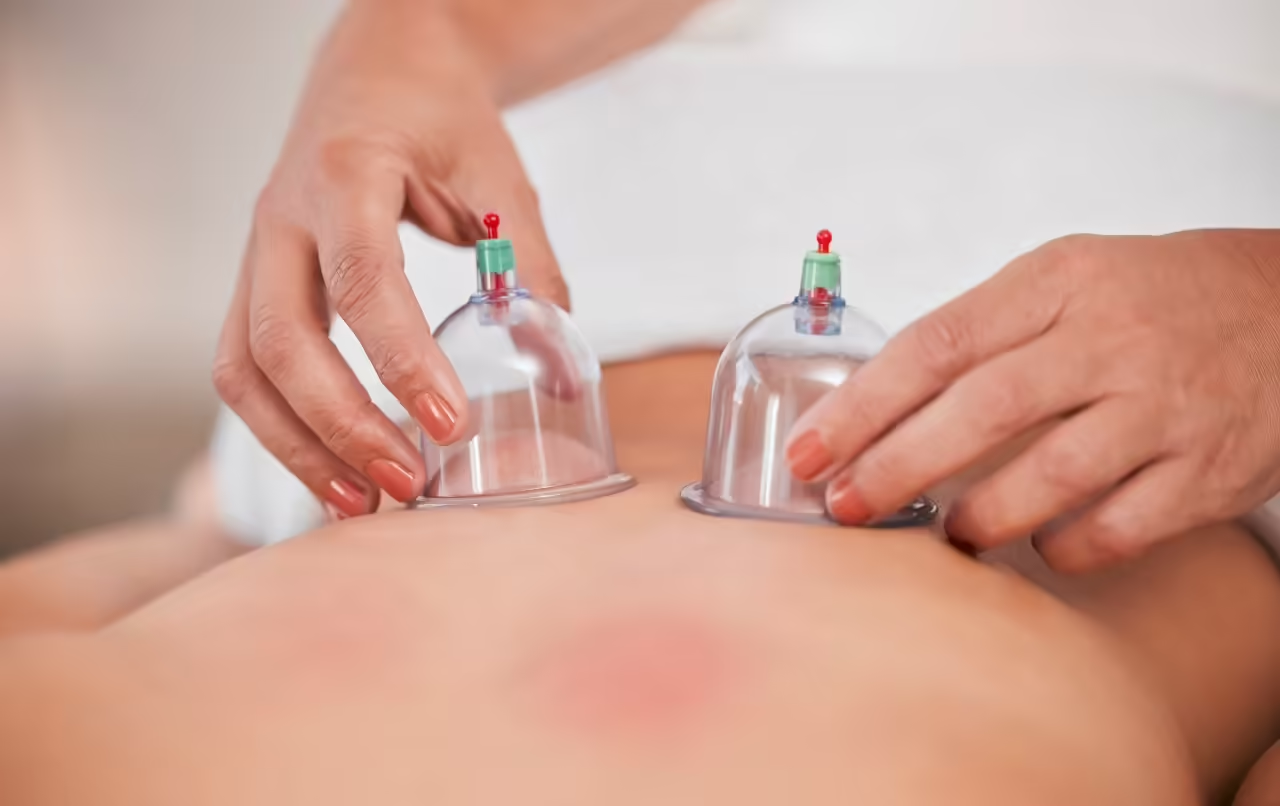
Cupping involves placing specially designed cups onto selected areas of the body and creating suction to gently lift the skin and underlying superficial tissues.
The cups may be made from silicone, glass or plastic, with suction created using a manual or mechanical vacuum.
Dry cupping is the technique used in this treatment. It does not involve cutting or puncturing the skin and can be used alongside other complementary therapies, including acupuncture and massage.
What can cupping therapy help with?
Cupping has been investigated for its potential role in managing musculoskeletal discomfort, particularly:
-
Neck and shoulder tension.
-
Back discomfort.
-
General muscle soreness.
-
Certain types of chronic musculoskeletal pain.
Some research suggests cupping may provide short-term pain relief for certain people. However, the overall quality of evidence remains limited, and further research is needed to establish its effectiveness.
Cupping is therefore best considered a complementary approach rather than a standalone treatment or cure.
What to expect from cupping therapy?
Before your treatment, your practitioner will discuss your medical history, symptoms and treatment goals to make sure cupping is appropriate for you.
During treatment:
-
Specially designed cups are placed on selected areas of the body.
-
Gentle suction draws the skin upwards into the cups.
-
Cups may remain in one position or be moved gently across the skin, depending on the technique.
-
The suction and treatment duration are adjusted to your comfort.
You may experience a pulling or tight sensation while the cups are in place.
Is cupping therapy safe?
Dry cupping is generally well tolerated, although temporary circular marks or bruising are common following treatment. These marks usually fade over several days, although they can sometimes last longer.
Other possible side effects include:
-
Temporary skin discolouration or bruising.
-
Skin irritation or tenderness.
-
Blistering, particularly with excessive suction.
-
Dizziness or light-headedness.
Cupping may not be suitable for everyone, particularly people with fragile or damaged skin, active skin infections, bleeding disorders or those taking blood-thinning medication.
Please tell your practitioner about any medical conditions, medication or relevant health concerns before treatment.
Book a cupping therapy appointment in Hackney
If you would like to find out more about cupping therapy at Hackney Podiatry & Health, contact our friendly team or arrange an appointment.
Our practitioners take an individual approach to treatment, helping you explore complementary therapies as part of your wider health and wellbeing.
Cupping Therapy FAQs
Does cupping hurt?
Cupping should not be painful, although you may feel a pulling or tight sensation as the suction lifts the skin. Your practitioner will adjust the suction to your comfort.
Will cupping leave marks?
Yes, temporary circular marks or bruising are common. These are caused by the suction and usually fade over several days, although the duration varies between individuals.
How long does a cupping treatment take?
Treatment time depends on the areas being treated and your individual requirements. Your practitioner will explain what to expect before starting.
Can cupping be combined with acupuncture?
Yes. Cupping is traditionally used alongside acupuncture and may be incorporated into a wider complementary treatment approach where appropriate.
How many treatments will I need?
This depends on your symptoms, treatment goals and response. Your practitioner will discuss an appropriate approach with you.