
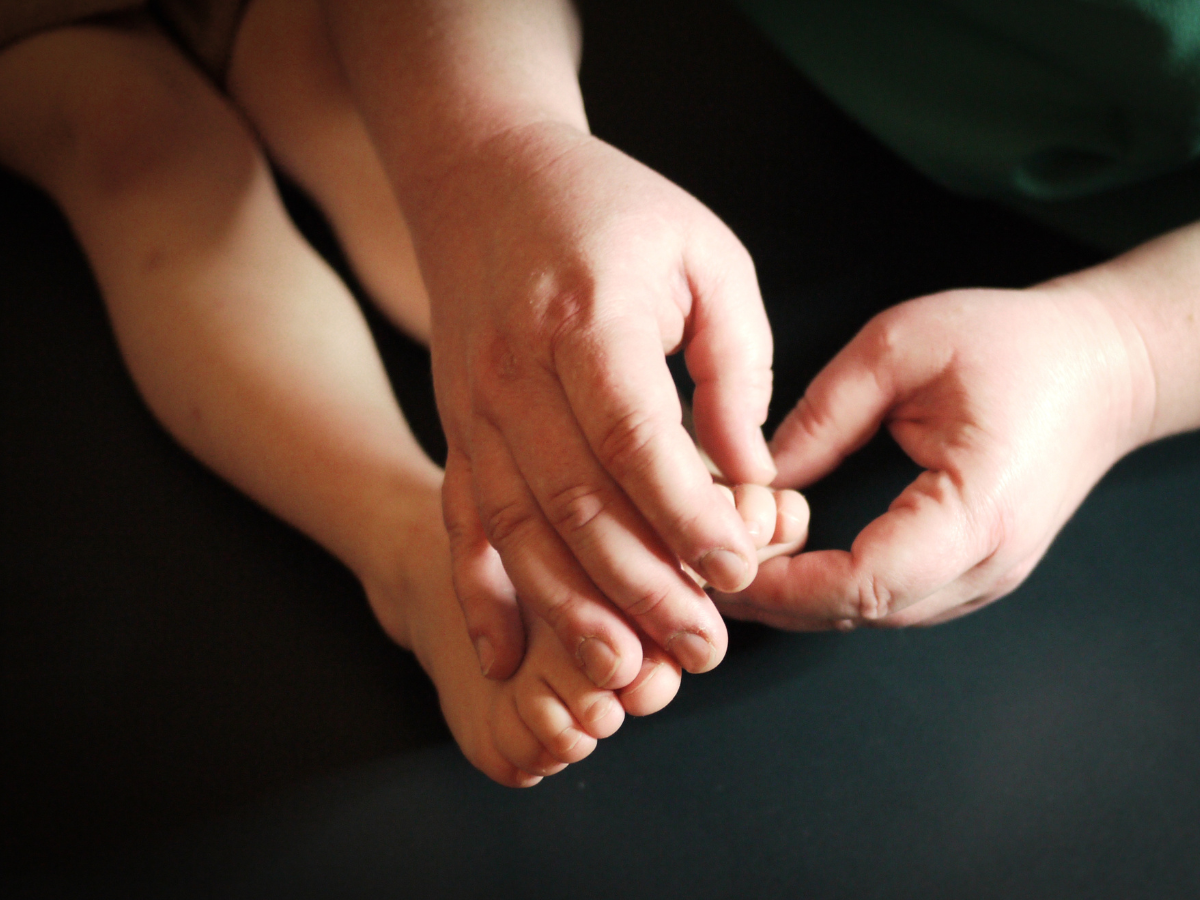
Children with the healthiest and most supple feet are those who habitually go barefoot. Studies carried out in developing nations show that non-shoe-wearers have better flexibility and mobility, stronger feet, fewer deformities and less complaints than those who wear shoes regularly. When a child must wear a shoe, it should be lightweight, flexible, shaped more or less quadrangularly, and above all should not have the arch supports and stiff sides once deemed necessary to give the foot support.
Many paediatric specialists including podiatrists, orthopaedic surgeons etc. strongly oppose ‘corrective’ or ‘orthopaedic’ shoes for straightening foot and leg deformities like flat feet, pigeon toes, knock-knees, or bowleg. There is no evidence that corrective shoes correct anything, and that most of the supposed deformities self correct in almost all cases.
Children who have the opportunity to go barefoot as often as possible have greater flexor strength, better ability to spread their toes and less deformities. There’s nothing better for children’s feet than walking and running barefoot, as it develops the muscles and ligaments of the lower limb and naturally strengthens the arches of the foot leading to improved awareness of where we are in relation to the space around us-proprioception.
Evidence has shown that children who are habitually barefoot have denser muscles on the soles of their feet; greater agility than those who had never gone barefoot, with a wider range of hip circumduction and more flexibility of the gluteal and hamstring muscles, and therefore, a greater ability to touch the toes without bending the knees.
There are times when our children can frolic safely without shoes, but sometimes their feet need protection from external elements. A shoe that closely mimics the barefoot is the best option. Look for a shoe made of soft leather as this allows for natural movement and growth of developing feet; and a flat, flexible sole which enables sensory feedback from the ground. A shoe should match the shape of the foot, and not the other way around. A child’s foot is wider at the toes and narrow at the heel.
Foot trouble among children is almost always caused by shoes, and in fact most adult’s foot trouble would either not exist or would be much less bothersome if properly-shaped shoes had been worn during childhood or, better yet, if those people had gone barefoot.
Choosing the right shoes for your children will help prevent long term foot and postural problems for the rest of their life. But don’t forget, barefoot is best!
Tracy Byrne
Podiatrist